

Margaret Thatcher’s UK: The World Outside of The Real Thing
Onstage at Katonah Classic Stage October 22 – November 1, 2026, Tom Stoppard’s The Real Thing premiered in 1982, early in Margaret Thatcher’s prime ministership and late in the Cold War. In Stoppard’s most heart-driven play, the focus remains on the characters and their romantic entanglements. But outside of their rehearsal rooms and living rooms, the country was changing.
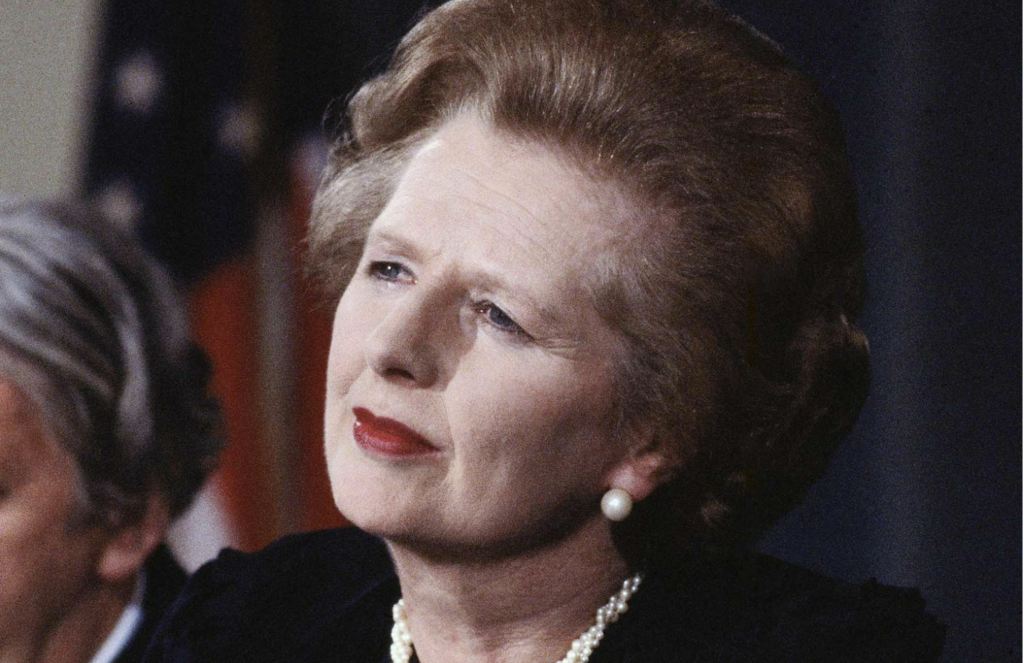
Margaret Thatcher became the United Kingdom’s first woman prime minister in 1979, a post she would hold for 11 years. In The Real Thing’s 1982, she was three years into her tenure, and many of her policies were first making impact. Home ownership was up, but so was housing cost. GDP was climbing steadily and inflation was coming down, but unemployment and economic inequality were rising. She also presided over the privatization of several national services, severe cuts to government spending, and the significant disruption of labor organizing. Her leadership was widely criticized.
That changed with 1982’s Falklands War, a major test of Thatcher’s leadership. In April 1982, Argentina invaded the UK’s territorial islands in the southern Atlantic Ocean — the Falklands, South Georgia, and the South Sandwich Islands — claiming they were actually Argentinian territory. Britain colonized the islands in the 1840s and the residents there strongly favored the UK’s protection. Thatcher fought back. Over the next 10 weeks, more than 200 British army troops and more than 600 Argentine troops (and three Falkland Islands civilians) lost their lives. By October, Argentina had surrendered (without acknowledging Britain’s sovereign rights). The outcome hastened a regime change in Argentina and was a major contributor to Thatcher’s Conservative Party’s landslide reelection in 1983 — the war cemented her as “The Iron Lady” in the popular imagination and shifted public sentiment significantly in her favor.
Margaret Thatcher
The play also takes place during the Cold War, the conflict between the Western bloc, led by the United States, and the Eastern bloc, led by the Soviet Union, beginning after World War II and ending in 1991. While there was no direct fighting between the primary factions, there were proxy wars and the constant threat of nuclear annihilation as each power built their arsenals. There was a period of detente in the 1960s and early 70s, but by the late 1970s and early 80s, tensions dramatically increased, with both US President Ronald Reagan and Thatcher taking on more aggressive stances toward the Soviets.
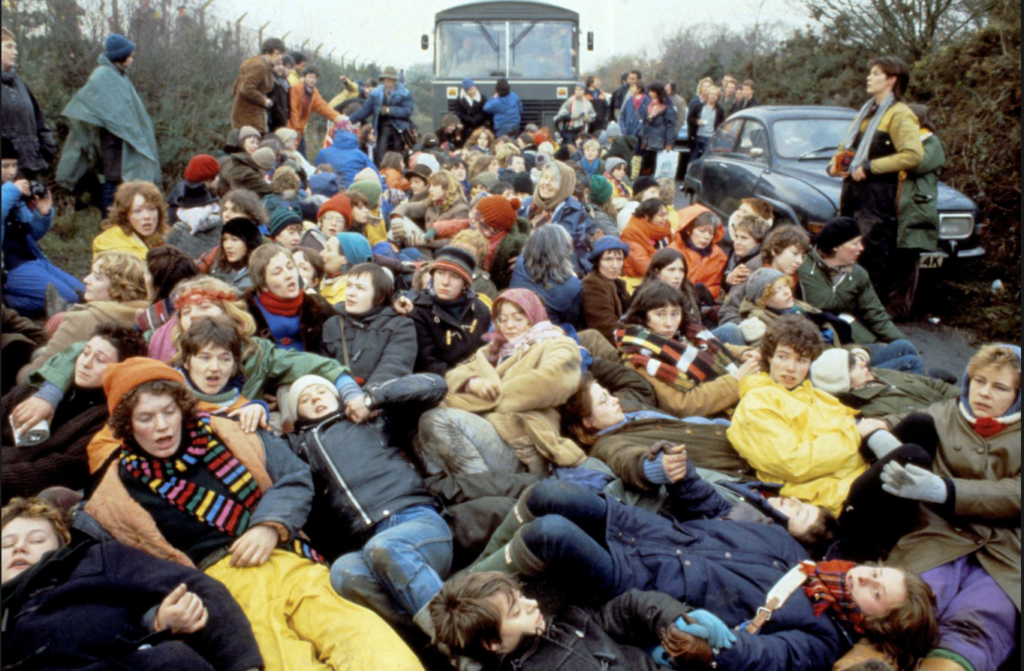
The reignition of the Cold War is the context for The Real Thing’s most direct reference to the political world outside of the play’s tunnel-vision of love: the anti-missiles protest movement. In 1981, NATO decided to base American cruise missiles at RAF Greenham Common in Berkshire, in the south of England. That year, 36 women marched from Cardiff, Wales, to the base to oppose the missile plan. Over the course of the decade, more than 70,000 women would participate, including blockading the base, camping out there, and encircling it by holding hands, persisting through arrests and at least one protestor death. The missiles arrived in 1983; they left in 1989, after the play was written and produced. In The Real Thing, Stoppard generalizes and fictionalizes this real-life protest, relocating it to the imagined Little Barmouth in Norfolk, on England’s east coast. He also opens participation in the demonstrations to all genders—Brodie is imprisoned for actions taken during a demonstration, and Annie spends much of the play working for his release.
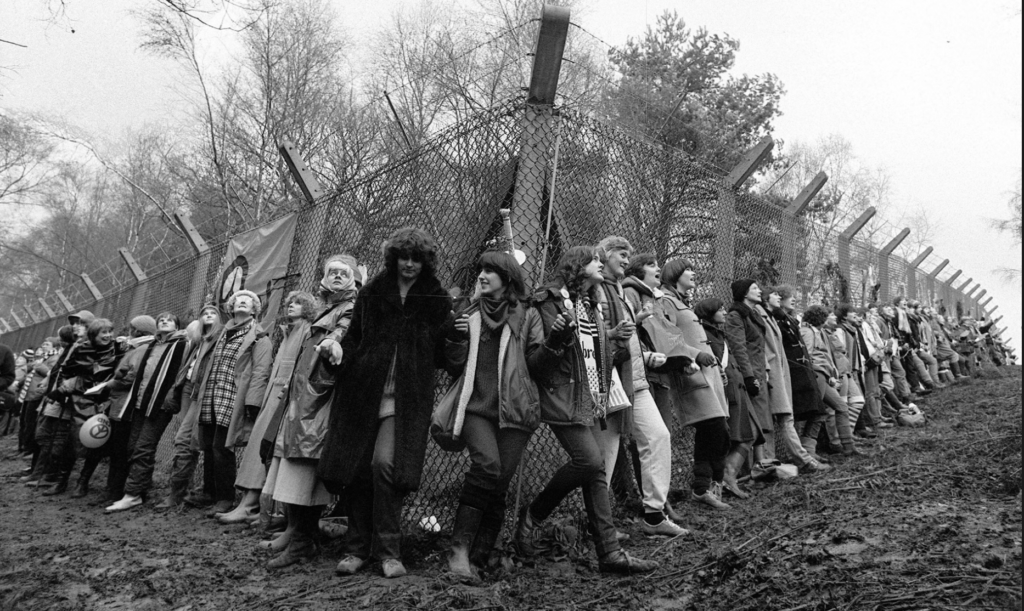
The Greenham Common peace camp against US cruise missiles (Source: The Guardian)
But despite the major tensions and upheavals roiling the country in the early 1980s and the direct effect of these events on Annie and Brodie in particular, The Real Thing remains a play more about the inner world than the outer one. No one talks about Margaret Thatcher or the effects of her government’s policies. The Falklands War isn’t mentioned. The missiles protest are discussed, but they are used more as a locus for romantic tension than an exploration of the political pressures of the day. For the play’s lovers, the outside world remains just that — outside of what’s most important. “The insularity of passion,” says Henry in The Real Thing (and Stoppard, through his onstage avatar). “I love the way it blurs the distinction between everyone who isn’t one’s lover. Only two kinds of presence in the world. There’s you and there’s them.” In The Real Thing, it’s the lovers (and their other lovers) who are real — everyone else, even the Iron Lady herself, is a blur.
THE REAL THING
OCTOBER 22nd through NOVEMBER 1st
at
Whippoorwill Hall
North Castle Library
Kent Place
Armonk 10504

ArtsWestchester

Westchester County Legislature

The Arnow Family Fund
Special Thanks to